What Is Embroidery? A Quick Overview for Beginners
The first time I walked into a haberdashery, I walked out with the wrong thread. Twice. I'd gone in for a "simple" project I'd seen online, and left with a bag of things I didn't understand and a growing suspicion that everyone else knew a secret I hadn't been let in on.
Embroidery is the craft of decorating fabric using a needle and thread — or yarn, ribbon, beads, or metal wire. It spans everything from a child's first cross-stitch sampler to museum-grade silk paintings.
Needle, thread, fabric, patience. That is the whole thing.
So why does embroidery feel complicated the moment you try to start? It is not the technique. It is the vocabulary. "Embroidery" is an umbrella term with dozens of traditions stuffed under it, each with its own name, its own logic, its own people insisting it is the One True Way.
Nobody hands you a map.
People are starting. In droves, actually. Embroidery is having a moment.
Partly the lockdown years — everyone wanted something to do with their hands that was not a screen. Partly slow fashion, where mending your clothes stopped being something to hide and started being something to post about.
If you have felt the pull, you are in very good company. This article will not just list names at you. It is a map. By the end, you will know which families these techniques belong to, how they differ, and — this is the bit that matters — which one you should try first.
There is a reason the search "types of embroidery" brings beginners here: the craft looks enormous until someone organises it for you. That is exactly what we are about to do.
How Are Embroidery Types Actually Categorised? A Simple Framework
There is no single official classification of embroidery types.
Which is exactly why you'll see one website confidently list "5 types," another "4 types," and another "20 types," all sounding equally certain. They're all right, and they're all incomplete — because they're each slicing the same cake at a different angle.
So here's a bit of honesty before we go any further: the "correct number" doesn't exist. Different guilds, museums, and teachers group things by the material used, or the fabric, or the region, or the effect.
That inconsistency is confusing when you're new. And it's the reason so many beginners give up before they've even threaded a needle.
In this guide, I am going to walk you through a framework of 5 families containing 15 types.
It's not the only way to organise things — but it's the one that actually helps you make a decision rather than just memorise vocabulary.
Here are the five families:
-
Surface Embroidery — stitches worked freely on top of the fabric, following a drawn design rather than counting threads.
-
Counted-Thread — stitches placed by counting the threads (or squares) of the fabric to build up geometric, gridded patterns.
-
Whitework & Open-Work — techniques that create beauty through texture, holes, and shadow rather than colour, usually white on white.
-
Regional Traditions — culturally specific styles with deep roots in a particular place, each with its own logic and look.
-
Mixed-Media & Modern — techniques that break the "just thread" rule, bringing in beads, ribbon, and even other fabrics.
What Is Crewel Embroidery?
Crewel embroidery is surface embroidery worked in loosely twisted wool yarn, traditionally on a linen or cotton ground, using free stitches to fill flowing designs — most famously the curling flowers and leaves of the Jacobean style.
It's not counted. You follow a drawn pattern and fill it as you like.
That word "crewel," by the way? It refers to the wool itself, not the technique. Trivia that catches everyone out. The Embroiderers' Guild of America describes crewel as work using "loosely twisted wool yarn" — and that soft, fuzzy quality is the whole secret to why it is so kind to beginners.
Wool is thick. Forgiving. A stitch that is slightly the wrong length, a curve that wobbles — it all gets absorbed into that lovely texture.
Try the same wobble with fine silk thread, though, and every mistake glares back at you. Wool just... hugs it.
The Jacobean designs date back to the 17th century, and there's something quite grounding about stitching a pattern that a woman was working four hundred years ago.
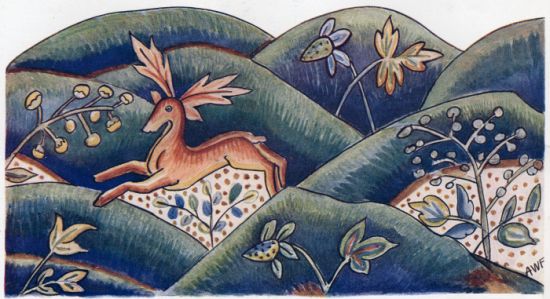
Crewel suits anything that wants a bit of cosy, textured decoration: cushion covers, small wall hangings, the corner of a fabric bag. All natural homes for it.
If you like the idea of colour and softness and don't fancy squinting at a grid, this is a lovely place to begin.
What Is Silk Ribbon Embroidery?
Take the thread out of the picture and put silk ribbon in its place — suddenly every stitch carries width, body, and a natural tendency to curl into petals.
That is silk ribbon embroidery. You get three-dimensional flowers almost automatically. No special technique required.
This is the one that makes people gasp when they realise how quick it is. Because the ribbon is already wide, a single stitch does the work of many thread stitches. A rose that would take you an hour in stranded cotton can come together in about ten minutes here.
The ribbon folds and twists as you pull it through, creating natural gathers and curves that read instantly as petals. It almost feels like cheating.
(It isn't. It's just clever.)
The soft, romantic finish makes it a favourite for anything that wants to feel special: bridal accessories, keepsakes, baby items, and floral accents on bags and pouches.
It's worth knowing that silk ribbon can be a little slippery to handle at first, and the finished piece needs gentle treatment — but for sheer reward-per-minute, few techniques beat it.
What Is Stumpwork?
Stumpwork is a form of raised, or embossed, embroidery that dates to 17th-century England, in which certain elements are padded from underneath so that they physically stand up from the surface of the fabric.
Think tiny embroidered mushrooms, insects, and figures that cast real shadows.
I know — it sounds like the sort of thing you'd need a decade of practice for.
And here's the reassuring bit: it's not nearly as hard as it looks, because the padding does the heavy lifting. You're not sculpting the raised shape freehand with your stitches; you're stitching over a little pad of felt or a wired edge that already has the form. Your job is mostly to cover it neatly.
The illusion of skill is largely an illusion of good scaffolding.
Back in the 1600s, stumpwork was worked in silk threads and used on boxes, mirror frames, and pictures. It fell out of fashion for a long time and has enjoyed a real revival in recent years, with contemporary artists using it to make astonishing miniature sculptures — beetles you'd swear were about to fly off, three-dimensional botanical studies, tiny worlds on a hoop.
It's a technique to grow into rather than to start with, but knowing it exists changes what you think embroidery can do.
What Is Goldwork?
Goldwork is embroidery worked with metal threads — traditionally real gold, silver, or copper — laid onto the surface of rich fabric. It originated in ecclesiastical vestments and ceremonial cloth.
The metal is usually too precious and stiff to pull repeatedly through the fabric, so it's often couched — laid on top and stitched down — rather than sewn through.
Here in Britain, goldwork carries genuine heritage weight. During the Middle Ages, English embroidery — known as Opus Anglicanum, literally "English work" — was so highly regarded that it was considered the finest in Europe, exported and prized by popes and kings alike.
It's the kind of fact that makes you sit up a little straighter next time you pick up a needle. The Royal School of Needlework, based at Hampton Court Palace, still teaches goldwork to this standard today.
It's not a beginner technique — metal threads are fiddly and expensive, and there's a real skill to keeping them smooth.
But it's worth knowing about, because you've almost certainly seen it. Goldwork appears on military and ceremonial badges, on state regalia, and increasingly in couture fashion, where houses like Chanel and Alexander McQueen have used metal-thread embroidery to spectacular effect.
File this one under "aspirational." For now.
What Is Cross Stitch?
Cross stitch is a counted-thread technique built entirely from small X-shaped stitches, worked on an even-weave fabric (usually one called Aida, which has a clear grid of holes) by following a chart square by square.
Every stitch is the same; the picture emerges from where you place them.
Here's my confession. The first cross stitch kit I bought sat unopened for three months because the pattern looked like a spreadsheet. All those little symbols and colour keys — it felt less like a craft and more like homework.
When I finally sat down with it one rainy Saturday, I finished it in a weekend. The "spreadsheet" turned out to be the entire point: it's the paint-by-numbers of embroidery, and once you accept that you cannot really go wrong, it becomes deeply, ridiculously relaxing.
That's why cross stitch is the single best entry point for most people — and why it tops nearly every "types of embroidery for beginners" list you will find. No freehand drawing, no judgement calls, no counting threads on plain fabric — the Aida grid does the counting for you.
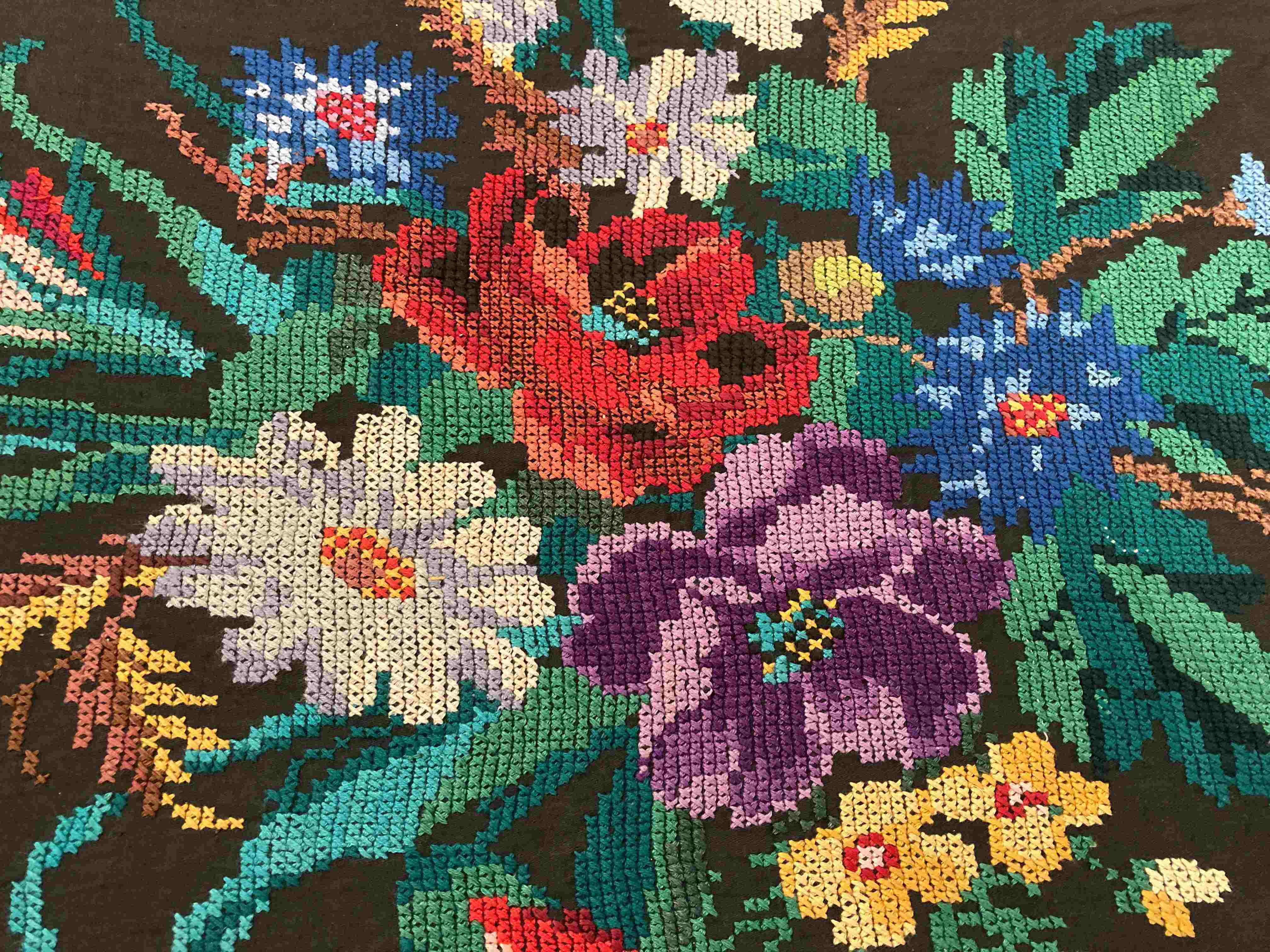
And it's had a proper reinvention lately. Cross stitch isn't just grandma's floral sampler any more; it's pixel art, pop-culture portraits, cheeky slogans, and modern geometric designs.
The V&A's embroidery collection traces the cross stitch's journey from a teaching tool used to drill young girls in their letters to a genuine art form in its own right. Not bad for a stitch shaped like an X.
Who knew?
What Is Blackwork?
Blackwork is monochrome counted-thread embroidery — classically black thread on white fabric — that builds up intricate geometric and floral fills from repeated stitches, most often the double running stitch (also called the Holbein stitch, after the painter who depicted it in Tudor portraits).
Here is a lovely bit of history. Blackwork was introduced to the English court in the 16th century by Catherine of Aragon, and for that reason, it was long known as "Spanish work." You'll spot it in portraits from the period, edging collars and cuffs in dense, delicate patterns.
The double running stitch is worked in two passes along the same line, which means — rather satisfyingly — that a true Holbein piece looks almost identical on both sides.
(The full story is on Wikipedia if you want to fall down that particular rabbit hole.)
What gets me about blackwork is how modern it feels for something so old. Strip away the colour and you're left with pure line and pattern, which sits beautifully on contemporary clothing and accessories.
A blackwork motif on a plain shirt cuff or a canvas tote reads as graphic and minimalist rather than fussy or old-fashioned. If bright, busy embroidery isn't your taste, this monochrome discipline might be exactly your thing.
What Is Canvas Work / Needlepoint?
You know the diagonal tent stitch? Now imagine working it across an entire canvas mesh until every last hole is filled. No background fabric visible. Not even a speck.
That is needlepoint — also called canvas work.
That last point is the key distinction people miss. In cross stitch, you're happy to leave plenty of Aida showing between motifs; the fabric is part of the design. In needlepoint, the goal is total coverage — every hole in the canvas filled, the whole piece a solid, dense sheet of stitching.
That's what gives finished needlepoint its characteristic sturdiness and its almost tapestry-like weight.
And that sturdiness dictates what it's used for. Because a completed piece is so hard-wearing, needlepoint is the traditional choice for things that take a battering: chair seats and footstool covers, cushions, spectacle cases, and structured bag panels.
It's slower than cross stitch, simply because you're covering every last thread, but there's a real meditative pleasure in watching a solid surface build up row by row.
Think of it as cross stitch's more substantial, upholstered cousin.
What Is Assisi Embroidery?
Here is a clever twist from Italy: instead of stitching the design, you stitch everything around it. The motif stays blank — naked fabric surrounded by dense colour.
That is Assisi embroidery. A negative-space effect, like a stencil flipped inside out.
Once you understand this inversion, Assisi's work becomes rather magical to look at. It's as though you're seeing a photographic negative rendered in thread: the shape you're "drawing" is actually the empty space, defined entirely by the dense colour surrounding it.
The motif is usually outlined in a fine Holbein stitch to keep its edges crisp, then the field around it is filled solid.
Named after the town of Assisi, the technique traditionally features stylised animals, birds, and heraldic designs, and it lends itself beautifully to borders, monograms, and repeating decorative bands.
It's counted-thread, so it shares cross stitch's beginner-friendly logic, but that negative-space idea gives it a distinctive, sophisticated look that feels a world away from a standard sampler.
A lovely second technique once you've got cross stitch under your belt.
What Is Whitework Embroidery?
White thread. White fabric. No colour to hide behind.
That is whitework — and when you strip colour out of the equation, craftsmanship becomes the whole show. Every effect depends on texture, stitch height, and the way light catches a raised surface.
It's the quietest, most elegant family in the whole of embroidery — and, if I'm honest, the most unforgiving, because there's no colour to distract the eye from a wonky stitch.
That restraint is exactly why whitework is the traditional choice for the most precious pieces: christening gowns passed down through generations, and the finest haute-couture bridal wear, where subtlety is the entire point.
"Whitework" is really an umbrella term covering several regional styles. There's Mountmellick, an Irish technique of bold, textured white stitching in heavy cotton; Ayrshire, a Scottish tradition of extraordinarily fine work with tiny needlepoint fillings; and Dresden work, a delicate German style that mimics lace using pulled-thread techniques.
Each is worth exploring in its own right, but they all share that same principle — beauty through texture, not colour.
What Is Broderie Anglaise?
Broderie Anglaise — the name literally means "English embroidery" in French — is an open whitework technique in which small holes, or eyelets, are cut into the fabric and their edges neatly bound with buttonhole or overcast stitch, creating a crisp pattern of pierced dots and shapes.
It's 19th-century English in origin, despite the French name.
Here's the thing: if you've ever picked up a summer dress in a British high street shop, you've run your fingers over Broderie Anglaise without realising it had a name. Those rows of tiny bound eyelets along a hem, a collar, or a cuff? That's it.
It's woven so deeply into our idea of summer clothing that it's practically invisible — which is a funny fate for a technique that once took real hand skill and is now mostly machine-produced.
Worked by hand, it's genuinely satisfying: you're not just adding stitches on top of fabric, you're transforming the fabric itself, letting light through the little holes.
It shows up on blouse collars and cuffs, dress hems, table linens, and pillowcases — anything that wants a fresh, crisp, slightly nostalgic edge.
Ever picked up a white summer dress and run your thumb over those little holes without thinking twice? Now you know. Broderie Anglaise. You are welcome.
What Is Cutwork?
Cutwork is an open-work technique in which sections of the fabric are cut away entirely, and the raw edges are secured with stitching, creating dramatic open shapes within the design.
Think of it as Broderie Anglaise's bolder, more theatrical relative.
The distinction between the two comes down to scale. Broderie Anglaise gives you small, contained eyelets — little pierced holes. Cutwork removes large, sculptural sections of cloth, leaving substantial open areas that transform the fabric into something closer to lace.
Because those bigger holes would collapse without support, cutwork often includes stitched bars — thin threads worked across the gaps to hold everything in shape and stop the design falling apart.
There are two styles worth knowing. Richelieu cutwork is the French version, defined by those decorative connecting bars (often with tiny loops called picots) bridging the open spaces. Italian cutwork covers a broader family of Mediterranean techniques, some of which edge toward true needle lace.
Both are used for exactly what you'd expect: elegant table linens, ecclesiastical cloths, and heirloom-quality edgings.
It's advanced work — cutting into your own fabric takes nerve — but the results are breathtaking.
What Is Sashiko?
Sashiko is a Japanese technique built entirely from small, even running stitches, classically white cotton thread worked on indigo-dyed fabric, dating to the Edo period.
Just one stitch, repeated with rhythm and care.
But here is the thing worth pausing on: Sashiko was not born to be pretty.
It was born to make things last. In rural Edo-era Japan, cloth was precious. Cotton was scarce. Working garments got reinforced with dense rows of running stitch — layer upon layer, patching and strengthening worn fabric so it could survive another season. This is the boro tradition. Mend, do not discard.
(There's a thorough primer on Wikipedia covering the Edo-period origins.)
The beautiful geometric patterns we admire today? They grew out of pure practicality. Decoration was a happy accident of function.
I love this technique for exactly that reason, and it's why it fits our moment so well. The visible-mending movement — patching your jeans on purpose, letting the repair show — is Sashiko's philosophy reborn. Centuries later. Same idea.
And practically speaking, it's the gentlest possible way in: one stitch type, no colour charts, no grids to squint at, just a slow, steady, genuinely meditative rhythm. If any technique here can be called restful, it's this one.
What Is Chikankari?
Chikankari is a delicate white-thread embroidery from Lucknow in northern India, dating to the Mughal era, worked on fine cotton muslin to create a soft, translucent, shadow-like effect.
It's whitework, but with a distinctly Indian sensibility.
One of its signature techniques is bakhiya, a form of shadow work in which stitches are worked on the back of the sheer fabric, so that the thread shows through the front as a soft, muted shape — a shadow rather than a solid line.
On thin muslin, this creates an effect of extraordinary lightness, as though the pattern is floating just beneath the surface of the cloth. There's no shouting for attention here; the whole aesthetic is elegance through restraint, all in the play of light through fabric and stitch density.
It sounds simple, but the reality involves extraordinary patience and precision from the embroiderer. The finest Chikankari is worked so subtly that you almost have to catch it at the right angle to see it fully.
It's most associated with summer kurtas and fine garments, where breathable muslin and understated white-on-white work suit the heat beautifully.
A technique to admire deeply and, perhaps one day, to attempt.
What Is Chinese Silk Embroidery?
Chinese silk embroidery is a family of highly refined techniques — organised into four great regional schools (Su, Xiang, Yue, and Shu) — that use extraordinarily fine silk threads, split down to a fraction of their thickness, to produce embroidery so detailed it resembles painting or photography.
The level of technical skill here is, frankly, humbling. A single strand of silk can be split into as many as sixteen filaments — finer than a human hair — and worked in subtle gradations of colour to render skin, fur, water, and light with photorealistic precision.
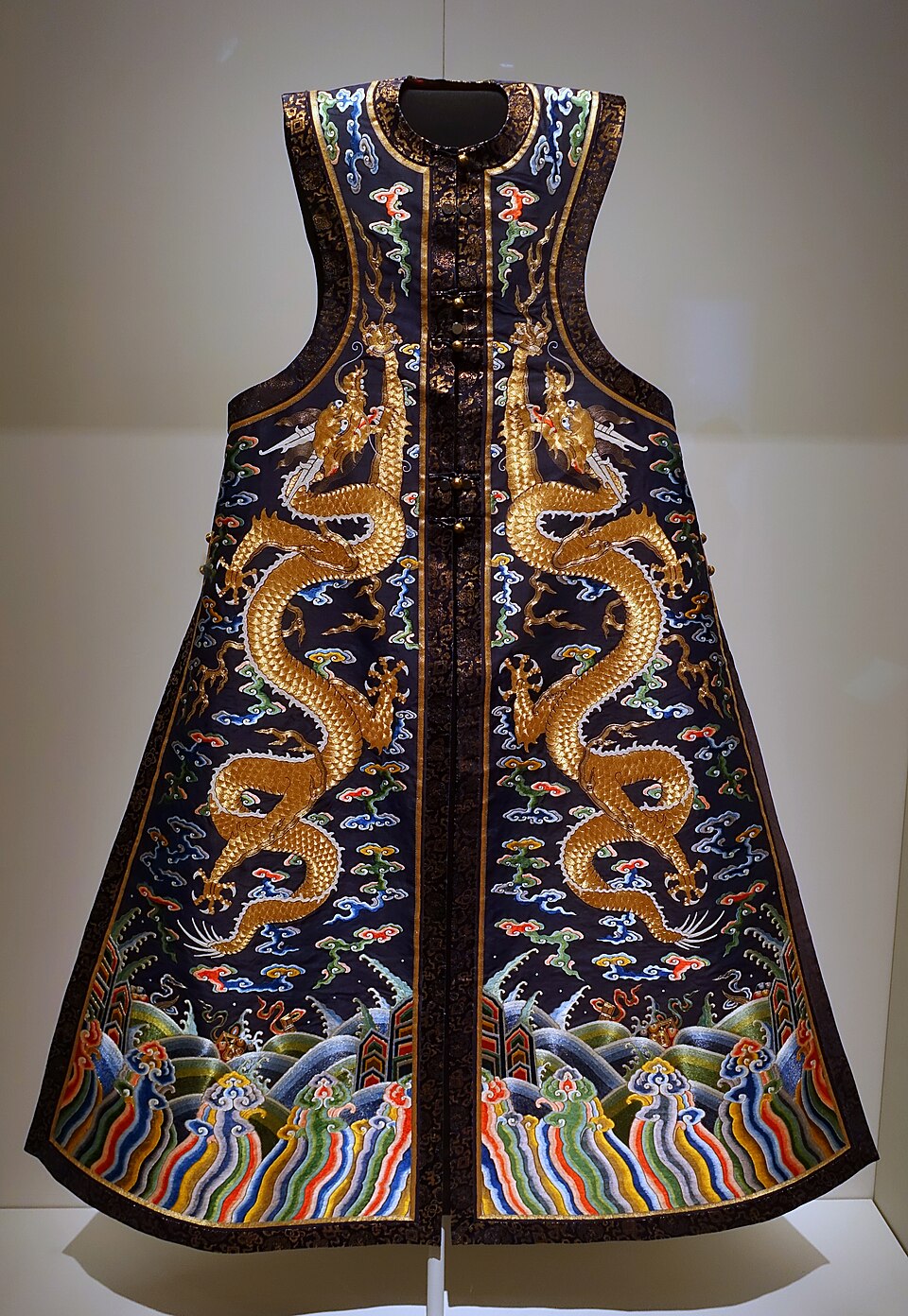
Some of the finest pieces are double-sided, showing a different (or perfectly matched) image on each face of a single translucent panel, with no visible knots or joins anywhere. It's arguably the most demanding embroidery discipline in the world.
Each of the four schools has its own character: Su embroidery (Suzhou) is known for its fine, subtle realism; Xiang (Hunan) for bold, painterly imagery; Yue (Guangdong) for rich colour and dense composition; and Shu (Sichuan) for its smooth, even sheen.
You don't need to memorise those — just know that this tradition represents embroidery at its absolute technical summit, and that its motifs and techniques continue to influence global couture, appearing on the runways of houses like Gucci and Armani.
What Is Bead Embroidery?
Bead embroidery is the technique of stitching beads, sequins, crystals, and other small objects onto fabric, so that light, sparkle, and dimension become part of the design rather than just thread and colour.
It sits firmly in the mixed-media family, because you're bringing something new to the fabric's surface.
What I find liberating about bead embroidery is that there are almost no rules about stitch type, which also makes it one of the few types of embroidery where your design eye matters more than your stitch technique.
You're not following a strict tradition of "correct" stitches; you're simply securing each bead where you want it. That means placement and bead choice become everything — the size, the colour, the finish, whether a bead catches the light or sits flat, how densely you pack them.
It's less about technical stitch mastery and more about an eye for design, which makes it surprisingly welcoming for people who find rigid technique off-putting.
It's the natural choice wherever you want glamour and shine: evening wear and gowns, statement clutch bags, and decorative accessories that need to catch the eye.
Fair warning: it is slow. A densely beaded piece can weigh a surprising amount. But for sheer impact? Nothing else in the embroidery world sparkles quite like it.
Worth the wrist ache? You decide.
What Is Appliqué?
Appliqué is the technique of cutting shapes from one fabric and stitching them onto a base fabric — fabric-on-fabric rather than thread-on-fabric.
The decorative element is the cut piece itself; the stitching mainly secures and outlines it.
Purists sometimes argue about whether appliqué really counts as "embroidery" at all, since so much of the effect comes from the fabric rather than the needlework.
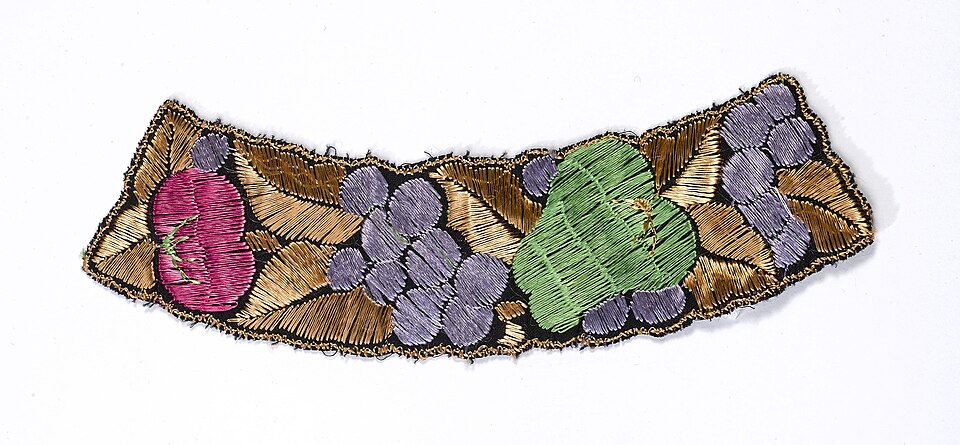
But it earns its place in the family through its edges: the classic blanket stitch (and its decorative cousins) used to border each applied shape is proper hand embroidery, and it's what turns a stuck-on scrap into a crafted piece. So we'll keep it in the club, thank you very much.
And I'd argue it's the most practically useful technique in this entire article. Want to add a name to a school jumper? A monogram on a tote bag? A patch over a hole in your child's jeans, or a decorative motif on a quilt? That's appliqué.
It is fast, forgiving, endlessly customisable, and genuinely useful in everyday life. Which, honestly? More than you can say for most crafts.
If you want embroidery that does something as well as looks good, start here.
How to Choose the Right Type of Embroidery for Your Project
Fifteen techniques are a lot to hold in your head, so let's turn it into a decision, not a reading list.
The honest truth is that the "best" type of embroidery is simply the one that matches what you actually want to make — so start with the project, not the technique. If you browse enough types of embroidery guides, you will notice they all circle back to this same advice, because it actually works.
Want to decorate a bag?
Crewel (cosy, textured flowers). Silk ribbon (quick, 3D blooms). Appliqué (bold, graphic shapes).
Fancy making a clothing patch?
Cross stitch, blackwork, and appliqué. All forgiving. All survive the wash.
Drawn to delicate accessories?
Whitework, Chikankari, and bead embroidery each bring their own kind of refinement — from subtle shadow to full sparkle.
Dreaming of a wall hanging or tapestry?
Needlepoint gives you that solid, weighty finish. Crewel offers softness. Stumpwork adds jaw-dropping dimension.
Prefer minimalist, graphic patterns?
Sashiko and blackwork. Clean lines, no fuss, quietly modern.
And if you are an absolute beginner who has never held a needle, go straight to cross stitch or Sashiko. Everything else can wait.
When it comes to buying your bits, UK crafters are well served.
On the high street: Hobbycraft, stores nationwide, stocks the basics. John Lewis's haberdashery departments carry good-quality threads and fabrics.
And if you are lucky enough to have a local independent needlework shop nearby, go. The advice alone is worth the trip.
Online, LoveCrafts has a huge range and plenty of free patterns. Etsy UK is brilliant for independent designers and unusual kits.
For free stitch tutorials, technique guides, and a comprehensive embroidery stitches library, NeedleNThread is the internet's most generous resource — bookmark it early.
For a proper beginner set — the kind where everything arrives in one tidy box — both Hawthorn Handmade and LoveCrafts do excellent starter kits. Starting with a kit means you skip my haberdashery-thread humiliation entirely.
If I were starting over tomorrow, knowing everything I know now?
I'd grab a Sashiko kit. One stitch. Zero overwhelm. Instant meditative rhythm. You cannot get it wrong, and by the end of an evening you'll have made something real — which, when you're new to a craft, is worth more than any amount of ambition.
Frequently Asked Questions About Embroidery Types
What are the five types of embroidery?
There's no official "five types" — different sources group them differently, which is why the internet can't agree.
The Embroiderers' Guild of America lists blackwork, whitework, stumpwork, cross stitch, and crewel as five main categories, and that's a perfectly good starting point.
This article covers fifteen, though, because making a genuine project choice requires understanding more than five.
What's the easiest type of embroidery for a complete beginner?
Cross stitch (you follow a grid, so you genuinely can't go wrong) or Sashiko (which uses just one stitch — the running stitch). Both require zero freehand drawing ability, so you do not need to be able to "draw" at all. Both cost around £10–£15 to start — a beginner embroidery kit with hoop, fabric, and threads included. Low risk. Low stakes. Ideal.
What's the difference between embroidery and cross stitch?
Can I do embroidery on a regular sewing machine?
How long does it take to learn embroidery?
The basic stitches — running, back, and satin stitch — can be picked up in a single afternoon.
Your first completed small project is realistically a weekend's work.
Getting skilled enough to tackle complex designs takes perhaps three to six months of regular practice.
The good news? You do not need all fifteen types. Just one you genuinely enjoy.
How hard can one be?
Where can I buy embroidery supplies in the UK?
In-store, try Hobbycraft (nationwide), the haberdashery departments at John Lewis, and any local needlework shop you can find.
Online, Etsy UK both have huge, beginner-friendly ranges.
For all-in-one beginner kits, Hawthorn Handmade and LoveCrafts both produce excellent starter sets that include everything you need — so you won't walk out with the wrong thread. Twice.